Showing posts with label BBQ. Show all posts

Tuesday, March 14, 2017

Texas Style Brisket


This article was originally from a section in the book I am currently writing called 'The Barbecue Smoker Cookbook'. The primary emphasis was on how to properly smoke a brisket. Not everyone has access to a smoker, and to be honest, smoking a brisket takes a lot of time and attention. So I wanted to write an article so that the average home cook could make a delicious brisket without having to stay up all night to tend the fire of the smoker. Having said all of that, smoking a brisket is still my preferred method of cooking, however this brisket comes out nice and tender and it takes almost no effort on the cooks part once it goes in the oven.

Brisket can be a great low carb high fat (LCHF) and Ketogenic (Keto) protein source if prepared and cooked properly. What I mean by that is, by using the proper rub (minimal, or no sugar) eliminates most of the carbohydrates that are typically found in commercial barbecue rubs. Now, I do not propose the use of erythritol or other sugar substitutes in the use of my barbecue rub. They may work great, but I am not a big fan of the cooling effect (after taste) that some of them have. To be honest, I have not wanted to try using erythritol in place of sugar simply because I do not want to waste a brisket just in case it comes out tasting like crap. Erythritol may be a good brown sugar substitute, but I have simply not used it.

So as a LCHF eater, I now make my rub with either 2 tablespoons of sugar, or simply omit it altogether. Using 2 tablespoons of brown sugar makes the rub 9 grams of carbohydrates per pound of cooked meat (for the whole recipe), while the rub without the sugar is 8 grams of carbohydrates per pound (for the whole recipe). The other carbohydrates come from the spices which are used in the rub. Remember, if you have read any of my other articles, then you know spices contain small amounts of carbohydrates that many LCHF and Keto eaters forgot to account for. So in this article I have listed the nutritional values for making the rub with and without brown sugar so that you can make an informed decision as to the way you want to make your barbecue rub.


Selecting A Brisket

A brisket is essentially two types of meat, the skirt and the lifter. The large piece of meat that runs along the bottom of the brisket is called the skirt or flat. The meat towards the top side (fat side) is called the lifter or point. The skirt of the brisket is the leaner portion of the cut with almost no fat. The lifter on the other hand is the opposite having a large amount of fat or marbling. There is a distinct layer of fat in the middle of the brisket that separates the skirt from the lifter. In addition the grain of these two cuts of meat run in different directions and should be separated before carving (See Serving Your Brisket).

When choosing a brisket, you want a whole, untrimmed beef brisket. This is going to weigh in at between 10 and 20 pounds depending on how it is cut and where you get it. Buy your brisket based on the number of people you wish to feed, a typical portion being about 6 to 8 ounces of cooked brisket per person. On average, a smoked brisket is going to give you about half the weight in meat of the original piece of meat, meaning if you bought a 12 pound brisket you will get about 6 to 8 pounds of meat when you are done (based on the 8 ounce rule, enough brisket for 10 to 12 people as there is some wastage). This is due to two factors, first because there is is so much fat in a typical untrimmed brisket, about 10 to 15% of total weight. Second, because of shrinkage during cooking process, although the low and slow process of cooking does inhibit this somewhat.

You do not need to spend a fortune on brisket. In fact, the brisket we purchased for this article was $1.76 per pound at my local Walmart. Last week, Walmart was out of brisket and my local Brookshires supermarket had them for $4.99 per pound (a 12lb brisket was $59.88) that's just ridiculous. No matter what you my have read or seen on YouTube, even the cheapest brisket when cooked long and slow will be tender and juicy, that's the benefit of long, slow, low heat cooking.


Trimming The Brisket

As mentioned earlier a whole brisket can run anywhere from 10 to 20 pounds, and if you are planning on cooking a brisket it is best (in my humble opinion) to buy an untrimmed brisket as this gives you more control on what you want to trim. To prepare your brisket for cooking you need to trim away some of the excess fat. For lack of a better term, we will call the fat side of the brisket the top and the non-fat or meat side the bottom. The top side of an untrimmed brisket has a thick layer of fat that runs the entire length of the brisket with the fat layer being thicker over the lifter. When trimming your brisket the key is not to remove too much fat as this will help keep the brisket from drying out as well as add flavor to the meat during the cooking process. So let’s get trimming.

First, you will want to remove any excess fat or loose pieces of meat that may be hanging from the side of the brisket. Now, I'm not suggesting that you carve off all the fat or cut it up, but I find it easier to work with if you get it prepared just right. Second, remove some of the fat layer of the lifter or fatty cap of the brisket. Removing about 30% of the fat layer should be sufficient. Remember, you do not want to cut all the way down to the meat, you just want to remove some of the excess fat.

Once you have trimmed the brisket, I suggest that you weigh the fat and subtract that amount from the initial weight of the brisket before cooking in order to arrive at a proper expected cook time. Remember you only want to smoke your brisket for 1 to 1 ½ hours per pound of meat. Cooking the meat any longer than this will cause it to dry out and become tough. Don’t be surprised if your trim job reduces the total weight of the brisket by 1, 2 or even 3 pounds, anymore than this and you have probably trimmed off too much fat. Once you have completed trimming the fat and loose pieces off the brisket you are ready to prepare the brisket for cooking. 


Preparing the Brisket (The Rub)

It takes a long time to properly cook a beef brisket and applying a good barbecue rub to the meat and placing it in the refrigerator to rest overnight, is essential to cooking a great brisket. When applying your BBQ rub to the brisket you want to cover the entire brisket even the fat. You need to make sure you cover the entire brisket so that it can take on the flavor of the rub and this is what you are going to be eating. So why season the fat? Well the fat is going to help keep your brisket moist, and fat is an integral portion of the meat (lifter) used when making chopped beef sandwiches. So do yourself a favor and coat the entire brisket fat and all.

When I rub a brisket I place it on several sheets of plastic wrap laid on top of sheets of heavy duty aluminum foil (the 20 inch side stuff is the best) so I can simply wrap the brisket first in the plastic wrap and then the foil after liberally applying my rub. The brisket is then placed in the refrigerator overnight or up to 24 hours before being cooked. The moisture from the wrapped brisket is going to turn the rub into a paste that will help it stick to the meat and help the meat absorb the flavor. You can skip this resting period, but your brisket will not be as flavorful.

5 tablespoons chili powder
4 tablespoons garlic powder
4 tablespoons onion powder
4 tablespoons paprika
2 tablespoons salt
1 tablespoon black pepper
2 teaspoons red pepper
2 teaspoons cumin, ground
1 teaspoon cinnamon, ground

Mix all ingredients together and apply generously to brisket. This rub recipe makes about 1 ¼ cups of rub and should be enough to liberally cover a 10 to 12 pound brisket.
Whole Recipe (with ¼ cup brown sugar)
Calories – 654, protein 19.4 grams, fat 10.9 grams, carbohydrates 112.3 grams

Whole Recipe (with 2 tablespoons brown sugar)
Calories – 479, protein 19.4 grams, fat 10.9 grams, carbohydrates 66.8 grams

Whole Recipe (with no brown sugar)
Calories – 445, protein 19.4 grams, fat 10.9 grams, carbohydrates 57.8 grams

Chef's Note: The brown sugar in a traditional barbecue rub helps your brisket develop that nice dark caramelized coating known as 'bark'. However, sugar is extremely high in carbohydrates and is therefore not ketogenic. I have included three nutritional values for this rub it you wish to use a small amount of brown sugar in your rub. This particular 12 pound brisket yielded about 7.5 pounds of meat (about 63% yield). So if you used ¼ cup brown sugar that would be about 15 grams of carbs per pound, 2 tablespoons brown sugar about 9 grams of carbs per pound, and without brown sugar about 8 grams of carbs per pound. Granted a lot of this will be lost in the carving process, I just wanted you to have the information.


Cooking Your Brisket

Preheat your oven to 225 degrees F (107 degrees C) for the whole cooking time. Remember that your brisket is going to need to cook for somewhere between 1 ½ to 1 hour per pound. Not all briskets are created equally so the cooking time is going to vary, but I have found that in our oven a 12 pound brisket (before trimming) is nice and tender when cooked for 12 hours.

If you placed your brisket in the refrigerator overnight, then remove it about two hours before you want to place it in the oven. I unwrap my brisket and place it in a large disposable aluminum roasting pan as we do not have a large enough regular pan to accommodate a 10 – 12 pound brisket. BTW, if you cover it with plastic wrap and foil, you want to remove this before placing the brisket in the oven. I put my brisket in the oven before we go to bed and cook it for 12 hours. No need to turn or flip the brisket, just let it sit in the oven undisturbed for 12 hours (make sure to put it fat side up in the pan).


Once your brisket has cooked for the estimated time based on it's trimmed weight, it's time to check the temperature. Because a brisket is composed of two different types of meat as mentioned earlier (lifter and the skirt) taking the final temperature of this mixed meat and fat structure of isn't as straightforward as you might think, however it's not rocket science either. Fat heats faster than meat so you will find that the internal temperature of your brisket is very different depending on where you take your reading. In order to ascertain the proper temperature of the brisket, you will need to take the temperature in several places, aiming for a thick piece of meat. By this point the fat is about as solid as warm butter. The meat on the other hand should give you some resistance as you insert the probe. You are ultimately shooting for an internal temperature about 185 to 190 degrees.


Carving and Serving The Brisket

Carving a brisket is more art than a science, and an art that requires experience more than technique. If you go slow, and watch what you are cutting, however, you shouldn't have much trouble getting a large number of good slices that are perfect for serving. Start by cutting back or trimming the fat layer on the top of the brisket to expose the meat. Then working from the thin, square end of the brisket (the skirt), cut long thin slices about the thickness of a pencil. If you find that the brisket is a little tough, cut it thinner. If the brisket starts to fall apart cut the slices thicker. As you work your way along you can trim off any large pieces of fat. Once you get to the point end of the brisket you will find a second layer of meat on the top of the skirt known as the lifter. You should now be able to see the strip of fat that divides these two cuts of meat. Cut through this fat separating the lifter from the skirt. The grain of the lifter runs differently from the skirt so you will want to cut it in the other direction.


Like anything, the more brisket you cook, the better your slicing technique will become, and soon you won't have any trouble carving up a perfect brisket. Remember, you are cooking for friends and family so relax, enjoy yourself, besides your friends and family won't care about your carving as your brisket will be so tender and delicious.

In many restaurants the lifter which has a high fat content is chopped with any trimmed portions from the skirt to make chopped beef sandwiches, while the leaner skirt is used for sliced brisket sandwiches or plated entrées (which is what I do). The skirt can be used for chopped sandwiches, but the moisture, seasoning and fat content of the lifter make it the perfect meat for this technique; whereas the skirt easily becomes dried when chopped and is often layered in a heavy amount of sauce to overcome this. In my opinion this defeats the purpose of cooking and or smoking the brisket if it is hidden under the flavor of the sauce, rather a good barbecue sauce should accentuate the flavor of the brisket not overpower it.


Conclusion

Do I prefer a smoked brisket over one cooked in the oven, well duh… But let's face it, we all do not have the time to stay up all night and tend the fire of a smoker to keep the temperature in the sweet spot (225 – 250 degrees). However, placing a brisket in the oven overnight to cook is just about as easy as it gets, and the results are quite phenomenal given the fact that you do not have to mess with the brisket once you throw it in the oven. This recipe is quite literally a set it and forget it type of recipe.

Remember a brisket is going to yield about 60 – 65% of it's cooked weight. Our 11.58 pound brisket yielded just a little over 7 pounds of meat after trimming and cooking, making our final cost $2.81 per pound of edible meat. Had I purchased the brisket from Brookshires at $4.99 per pound instead of $1.76 per pound the final cost would have been $7.97 per pound. Yes, my family loves brisket, but I am not paying eight dollars a pound for brisket (BTW, that's about what you pay at the restaurant).


If you need a good 'Texas Style' barbecue sauce check out my article 'Condiments The Diet Killers' for my version of LCHF/Keto barbecue sauce that is only 1 gram of carbohydrate per tablespoon. There are several other LCHF/Keto barbecue sauce options listed below that you can access from our blog by simply clicking on the article heading. As always, I hope that you have found this article informative and beneficial for you and your family, if so please take the time to share it with your friends so that they can benefit as well. Don't forget to follow us on out Facebook Page 'CulinaryYouLCHF' or add us to your circle Google+.


Similar Articles On Our Blog:


References:

Gamel, Todd, The Barbecue Smoker Cookbook, Currently in Editing

Sunday, November 20, 2016

LCHF Kansas City BBQ Sauce


With it's bold, sweet, and tangy flavors, Kansas City (KC) style barbecue sauce has become one of the most popular styles of barbecue sauce purchased by Americans. Now there are quite a few different commercially prepared KC style barbecue sauces, but there is only one problem, not one of them is low carb. So what are you supposed to do if you get a hankering for some good old fashioned barbecue, but are diabetic, or are following a low carbohydrate high fat diet? Well, make your own of course. So, if you love the sweet tangy flavors of KC barbecue sauce, then you should love my low carbohydrate high fat (LCHF) version of this popular style sauce that I call 'Sweety Que'.

Kansas City Style barbecue sauces start with a base of tomato sauce, tomato paste, onions, and garlic. The sweetness comes from brown sugar, molasses, and sometimes honey, while it gets it tartness from vinegar or lemon juice, soy sauce and Worcestershire sauce. It's final flavor component comes from it's spice mix of salt, black pepper, chili powder, dry mustard, allspice, and cayenne pepper. Because Kansas City sauces are bold in flavor and thicker than other barbecue sauces, they are typically used as a finishing sauce which is brushed on just before serving or near the end of the cooking cycle.

In this article I will teaching you how to make my LCHF version of KC barbecue sauce 'Sweety Que'. For this recipe we substitute the brown sugar and molasses with liquid sucralose which contains no carbohydrates, and in place of the traditional ketchup we will be using tomato sauce and tomato paste.


The Recipe

If you love the sweet tangy flavors of Kansas City barbecue sauce, and you have been looking for a low carbohydrate alternative to commercially prepared sauces, then I guarantee you that you will love my LCHF version of KC style barbecue sauce that I call 'Sweety Que'. While tomato sauce and tomato paste have carbohydrates, most of the carbohydrates in commercial KC style barbecue sauces come from brown sugar and molasses. In this recipe we will be substituting liquid sucralose for the sugar and molasses.

KC 'Sweety Que' (Yield 2 ½ cups, 40 tablespoons)

2 (8oz cans) tomato sauce
¼ cup apple cider vinegar
¼ cup water
2 tablespoons tomato paste
½ medium onion, diced
1 whole clove, ground
1 bay leaf
1 tablespoon Worcestershire sauce
1 tablespoon canola oil
1 tablespoon minced garlic
1 teaspoon dark chili powder
1 teaspoon paprika
1 teaspoon soy sauce
1 teaspoon dried mustard
1 teaspoon salt
½ teaspoon black pepper
½ teaspoon cayenne pepper
1/8 teaspoon ground allspice
1 drop liquid smoke (optional)

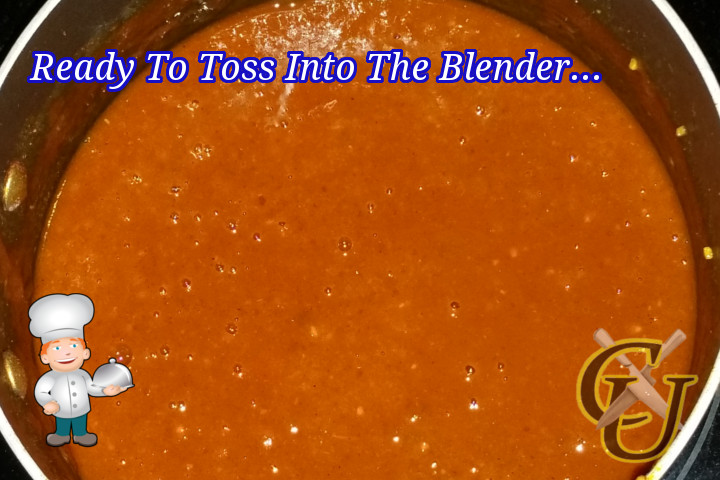
Heat the oil in a medium saucepan over medium heat. Stir in the onions, garlic, tomato paste, chili powder, paprika, red pepper, allspice, and cloves and cook, stirring, until paste is dark brick red, about 3 minutes. Add the remaining ingredients and heat just until the sauce simmers, the cook for 30 minutes to allow the flavors to come together. Remove and discard bay leaf. If desired, puree with an immersion blender or add to a table top blender once the sauce has cooled.

Chef's Note – I suggest that you start out with 8 drops of sucralose and then taste the sauce for sweetness, if it is not quite sweet enough then add 2 more. Remember KC style barbecue sauce tends the be sweeter than other styles, but as always adjust the sweetness to suit your personal preferences.

Total Recipe – Calories 399, protein 5.75 grams, fat 14.89 grams, carbohydrates 44 grams
Per Tablespoon – Calories 10, protein 0.14 grams, fat 0.37 grams, carbohydrates 1.1 grams

Just for comparison, I have listed the three most popular commercial KC style barbecue sauces with their nutritional information.

Bull's-Eye Kansas City Style
Per Tablespoon – Calories 25, protein 0 grams, fat 0 grams, carbohydrates 6.5 grams

Heinz Kansas City Style, Sweet and Smokey
Per Tablespoon – Calories 30, protein 0 grams, fat 0 grams, carbohydrates 7.5 grams

KC Masterpiece Original
Per Tablespoon – Calories 29, protein 0.2 grams, fat 0.1 grams, carbohydrates 7 grams

As you can see, all of the commercially prepared KC style barbecue sauces have at a minimum 6 times more carbohydrates than my KC 'Sweety Que' barbecue sauce. That's quite a substantial difference especially for those of us who are diabetic or are following an LCHF diet regimen. And the best part of all my 'Sweety Que' will not cause your blood sugar to spike like all the others mentioned in this article.


Conclusion

This has become one of my families favorite BBQ sauces. It is low carb and will not cause your blood glucose levels to spike. So if you are a diabetic or are eating LCHF you no longer have to worry about the number of carbohydrates in your barbecue sauce as this recipe only has 1.1 grams of net carbohydrates per tablespoon. For information on how to use and where to purchase liquid sucralose check out our article on the subject on our blog.

As always, I hope you have found this article to be informative and helpful and if so we ask that you share it with your friends. Don't forget to send us a friend request on Facebook on our page CulinaryYouLCHF or add us to your groups on Google+.


Similar Articles On Our Blog:


Sunday, April 10, 2016

Arthur Bryant's Original Style BBQ Sauce


In continuous operation since 1908, Arthur Bryant's has been written about many times and it's praises are sung by many throughout the internet. In an 1972 article in Playboy magazine author and self proclaimed food aficionado Calvin Trillian wrote “it has long been acknowledged that the single best restaurant in the world is Arthur Bryant's”. Now, that is quite a statement and while Arthur Bryant's was well known throughout the state of Missouri, this article thrust Arthur Bryant's into the national limelight.

Personally, I think Mr. Trillian made quite a bold statement, and I am not actually sure how you can very such a claim. After all we all have different tastes and what I may find as delicious, you may think tastes horrible. But the is the nature of opinions, we all have them and are entitled to our own unique perspective. I happen to think there are better barbecue places here in my home state of Texas, than Arthur Bryan's but that is just my opinion.

Anyway I digress, Famous for their 'burnt ends', the one thing that all the fans of Bryant's barbecue try and replicate is their original style barbecue sauce. As long as there have been blogs and message boards on the internet, there have been barbecue fanatics who have been working on creating a copy cat recipe for Arthur Bryant’s original style BBQ sauce that is served at their restaurant in Kansas City, Missouri.

According to Southern Living magazine “Bryant's uses double-strength pickling vinegar in the sauce, which makes for one hell of a punchy tang”. A double strength pickling vinegar is 10% (10% acid), most of the distilled white vinegar you buy on the local shelves of your supermarket is diluted to 5% (5% acid). In fact, I could only find one brand (Ozark White Pickling Vinegar) of 10% vinegar available on the internet. For some, even the power of 5% white distilled vinegar is too much, let alone 10% vinegar and many BBQ enthusiasts began to experiment with substituting the more mild apple cider vinegar for distilled white vinegar.

I have read from other's that a Bryant's that an employee once said that they used “double strength pickle juice”, to give their sauce that unique twang. While I have never seen or heard of commercially prepared pickles that were pickled “double strength”, using leftover pickle juice as the acid component to make barbecue sauce intrigued me. Barbecue restaurants go through a lot of 5 gallon buckets of dill pickle slices and using the leftover juice makes economic sense, especially in the early part of the 20th century when few things in a restaurant went to waste. Even if it was only as a flavor enhancer and it comprised only half of the total vinegar component it would add a unique flavor to the sauce.


The Sauce

Bryant's is not the typical 'Kansas City' style sauce which has become popular today. It tends to be thinner, less sweet, and have more of a vinegary tartness that the typical Kansas City style barbecue sauce. The sauces found in the region tend to be thicker, sweeter and use quite a bit less vinegar. If anything, Bryant's sauce seems to be a cross between a Lexington or Piedmont style North Carolina sauce and a Kansas City style sauce.


The Recipe (My Version Of Arthur Bryant's Original Sauce)
As long as there have been blogs and message boards on the internet, there have been barbecue fanatics who have been working on creating a copy cat recipe for Arthur Bryant’s original style BBQ sauce. I have been playing with the following recipe over the years and I think it is a pretty good representation of Arthur Bryant's original sauce.

There are some things you need to take into account when trying to copy a particular recipe. The choice of ingredients makes a difference. A dark chili powder as opposed to a 'regular' chili powder has a greater depth of flavor, types of paprika have a different flavor component depending on whether it is Hungarian, Spanish, or whether it is labeled simply as paprika. Without knowing the specific brands and type of spices used in a recipe, you simply have to go with what you have in your pantry.

While I have included it as part of the recipe, I no longer add lard to my sauce. Lard adds no specific flavor component and I believe that it was originally used to help thicken the sauce. I have found that by using diced onion and minced garlic rather than their powdered form that the sauce thickens sufficiently when blended that I did not need to add lard.

1 ½ cups water
¼ cup dill pickle juice or apple cider vinegar
1/3 cup dark brown sugar or 12 to 16 drops of liquid sucralose
¼ cup prepared mustard
¼ cup lard(optional)
2 tablespoons tomato paste
2 tablespoons tomato ketchup
1 tablespoon paprika
1 tablespoon kosher salt
1 tablespoon minced garlic
1 teaspoon chili powder
1 teaspoon black pepper
½ teaspoon ground cumin
½ teaspoon cayenne pepper
¼ teaspoon turmeric

Cook over medium high heat. Bring it to a boil, cover and simmer for 10 minutes. Remove from heat and let cool. Then take your immersion blender or place the cooled sauce in your blender and blend until smooth. Transfer to a jar and refrigerate overnight to allow the flavors to meld and mellow. The sauce will thicken as it cools, but will still be looser than a standard KC style sauce.


Chef's Note: I actually like substituting pickle juice for the vinegar component in this sauce, and it is my preferred way to make it as the pickle juice gives the sauce a unique taste that I like. Doing this may make it taste substantially different than Bryant's but my family likes it's tartness. If you do not have, or like lard, then use vegetable shortening or do as I do and simply omit it.

The hardest part about replicating this sauce for me is: 1) I do not have a sample of the sauce that is made in the store with me to compare side-by-side, 2 ) the label or ingredient list on the bottle makes it very easy to hide individual components of the commercial recipe under the umbrella title of “spices”. The following ingredients are listed on the label of Arthur Bryant's original barbecue sauce.

Arthur Bryant's Original Barbecue Sauce: Water, Seasoning (sugar, mustard, flour, spices, dried garlic, dried onion, soybean oil), Vinegar, Salt, Tomato Paste, Lard, Xanthan Gum, and Sodium Benzoate (preservative).


Conclusion

Many years ago, I started out making this recipe from combining many different ingredients of other recipes and then adding my own components and measurements. Over the years, I have tried adding various ingredients, keeping some, changing the amounts of some, and simply omitting others. This recipe started out as one posted on the 'Smoking Ronnies BBQ Blog' by a user identified as Mark Socha back in 2011. I felt his recipe used way to much paprika and was way to salty, however using his recipe as a base, I made many changes until it evolved into the sauce that I use today. 

So there you have have it, my version of the famous Arthur Bryant's original barbecue sauce. So how close is it to the original. Honestly, I remember it as being pretty close, however, memories fade and it has been many years since I have tasted their sauce and I have been making a version of this sauce for quite some time now. I do not know if the restaurant still makes their sauce from scratch or uses the commercially prepared sauce that they now sell in bottles. As always, we ask that if you find this information interesting that you please share it with your friends on Facebook and Google+. Don't forget to send us a friend request on Facebook and Google+. You can also subscribe to our blog so that you do not miss any of our new recipes.


References:

Murphy, Morgan, “Behind The Scenes At Arthur Bryant's Barbecue In Kansas City.” Southern Living, Accessed 2015.

Trillian, Calvin, “NO!, One Of The World's Foremost Authorities On Ribs, Cheeseburgers, French Fries, And Frosty Malts, Takes A Gourmet Tour Of Kansas City.” Playboy, April 1972, 109 -110, 208-209.

Saturday, March 19, 2016

Sauce-A-Palooza (Making Your Own BBQ Sauce)


Spring is fast approaching and many of you will be breaking out your barbecue grills and smokers for the summer. If any of you are like me you love to cook and eat barbecue. While there are a plethora of barbecue sauce choices on you local supermarket shelves, you can make your own unique barbecue sauces that are not only better in flavor, but are cheaper to boot. The great thing about making your own barbecue sauces is that most of you have already have the necessary ingredients in your pantry.

The following excerpt is from my BBQ smoker cookbook that I have been working on for some time. Like Seem to somehow get in the way, and I just not have had time to finish it. This chapter is on barbecue sauces, I hope you and you family will find the information useful and enjoyable.


Finishing Up (Sauce-a-Polooza)

Barbecue sauces come in a wide range of flavors and varieties. While examining the condiment isle at my local Wal-Mart I found more than fifty, that's right, more than '50' types or variations of barbecue sauce being sold. Depending on the brand and the celebrity chef who endorses the product the price can range from less than a dollar for a twelve once bottle when on sale to more than five dollars a bottle.

Depending on what part of the country you live in, your idea of what compromises a barbecue sauce may be somewhat different than say, mine. So to better understand what makes a great barbecue sauce, we need to look at a couple of variables that define what exactly a barbecue sauce is. These variables are primarily based on geography (where you live) and the type of ingredients used to prepare barbecue sauces in that region. It is generally accepted that there are five distinct geographic locations in the south and southwest that define the type and or flavor of a particular barbecue sauce. The Carolina's (North and South), Memphis, Kansas City, Texas, and Alabama. So to begin this barbecue sauce adventure, we will begin on the east coast in the Carolina's and work our way towards the west stopping in Kansas City, before heading south into Texas and then back to Alabama.


North and South Carolina


The Carolina's, which includes North and South Carolina is home to sauces that are primarily vinegar based. In both the eastern parts of North and South Carolina (white area on map) you will find sauces that are almost exclusively vinegar and pepper based, however as you travel towards the west, one finds that tomato sauce (orange area on map) begins to show up as an addition to this vinegar and pepper based sauce. In the mid-south region of South Carolina (yellow area on map) a unique variety of mustard based barbecue sauces can be found. Traveling towards the western part of the Carolina's along the Tennessee state line, we begin to see tomato sauce become a more dominant ingredient in barbecue sauces. However of all the sauces that come from this particular region, the most popular type or style of sauce comes from North Carolina generally known as “Lexington” or “Piedmont Style” barbecue sauce. This sauce is made from a combination of tomato sauce, vinegar and red pepper flakes. While this is the type of sauce that is most associated with the Carolina's, as you can see, this region has a few other offerings.


Carolina Style (Piedmont or Lexington) Barbecue Sauce


1 cup apple cider vinegar
1 cup water
½ cup ketchup
1 tablespoon onion powder
1 tablespoon garlic powder
2 teaspoons red pepper flakes
2 teaspoons brown sugar
1 teaspoon salt
1 teaspoon black pepper
½ teaspoon chili powder
½ teaspoon paprika

In a medium saucepan combine all ingredients and bring to a boil. Cover, reduce heat and simmer for 10 minutes, then remove from heat and cool before bottling in a squeeze bottle. Makes about 2 cups.

Variations:

Carolina Mustard Barbecue Sauce – Substitute ½ cup mustard for the ketchup, add ½ cup brown sugar, and ½ teaspoon Worcestershire sauce. Omit the paprika and increase the chili powder to 1 teaspoon.

I first encountered this style of barbecue sauce when I lived in the Raleigh-Durham area of North Carolina. Like everything, most cooks have their own particular take on this vinegar based barbecue sauce that is most often used on pulled pork. My particular variation includes the addition of garlic, onion and chili powders which I feel gives it an enhanced flavor profile. However, if you want a more basic or I hate to say “traditional” sauce simply omit these. Both of these vinegary, tangy sweet barbecue sauces are great on pulled pork and other smoked meats, and can generally be found in both North and South Carolina. As mentioned earlier, the tomato based vinegar sauce is sometimes called “Piedmont” or “Lexington Style” barbecue sauce, while the mustard based vinegar sauce found in Pee Dee or low coastal region of South Carolina is sometimes known as 'Carolina Gold.'


Memphis, TN

In Memphis, ribs and the dry rub are king and in the past, many Memphis barbecue restaurants did not offer a barbecue sauce, but over time patrons began to ask for sauce and a sauce based on the ingredients used in their dry rubs began to evolve. Now, just because the sauce may have been an afterthought and is not the focus of Memphis barbecue do not think for a minute that their sauces are inferior. Memphis style sauces differ from those of the Carolina's. Although vinegar is still a primary ingredient, it is generally pared with a equal amount of tomato sauce and or tomato ketchup as well as a variety of dry spices to give it a sweeter more complex flavor than it's Carolina cousins. As with my Memphis style sauce listed below, most restaurants start with a basic or all-purpose barbecue sauce and add various amounts of their dry rub to the sauce to give it a unique taste.


Memphis Style Barbecue Sauce


1 cup tomato ketchup
1 cup apple cider vinegar
½ cup water
¼ cup onion, chopped
2 cloves garlic, minced
4 tablespoons Memphis Style Rib Rub
2 tablespoons butter
2 tablespoons molasses or honey
1 tablespoon Worcestershire sauce

Melt butter in a small saucepan and saute onions over low heat just until they are starting to turn golden brown. Then add the garlic and saute for another 2 minutes taking care not to burn the garlic. Add the remaining ingredients and bring to a boil, cover the saucepan and reduce the heat and simmer for 30 minutes. While hot, puree sauce with an immersion blender, or allow to cool before placing it in a stand alone blender or food processor.

Variations:

Old Number '7' – Reduce apple cider vinegar to ¾ cup, and omit the water. Add ¾ cup Jack Daniels 'Old No. 7' Tennessee whiskey and prepare as above.


Kansas City, MO


Our final destination on the western tour of the barbecue regions of the United States is Kansas City. This is the one style of barbecue sauce that most commercial barbecue sauces are based on. Sauces from this region are thick and sweet primarily composed of tomato sauce or tomato ketchup, with a minimal amount of vinegar and a multitude of herbs and spices. Kansas City Style sauces probably have the most ingredients of all the barbecue sauces giving them a subtle yet complex variety of flavors. Because of their heavy use of sugars Kansas City style sauces tend to burn easily when exposed to direct heat. Therefore, they are better served on the side, or added to the meat just before removing from the smoker or grill.


Kansas City Style Barbecue Sauce


2 cups ketchup
1 cup brown sugar
½ cup prepared mustard
½ cup apple cider vinegar
¼ cup honey
1 bay leaf
2 tablespoons Worcestershire sauce
2 tablespoons chili powder
1 tablespoon onion powder
1 tablespoon garlic powder
1 teaspoon salt
1 teaspoon black powder

In a medium saucepan combine all ingredients and bring to a boil. Reduce heat and cover and simmer for 10 to 15 minutes or until sauce is thick and coats the back of a spoon. Remove sauce from heat and cool, makes about 3 cups.


Variations:

KC Masterpiece – Omit onion and garlic powders. Saute 1 medium onion in two tablespoons of olive oil over medium low heat, when golden brown, add 3 to 4 cloves of minced garlic and saute for 1 to 2 minutes. Add remaining ingredients plus ¼ cup A1 steak sauce and cook per instructions. Puree with an immersion blender or allow to cool and process in stand blender.

Sweet Baby Ray's – Substitute molasses for the honey and celery salt for the table salt. Add ¼ cup pineapple juice, 1 teaspoon liquid smoke, and ¼ teaspoon cinnamon and cook per instructions.


Northern Alabama

Northern Alabama is our final destination on the southern barbecue tour. I am not really sure if this small area around Decatur qualifies as barbecue region, however, because of the uniqueness of their white barbecue sauce I have included it as well. Used primarily on chicken, this Alabama phenomenon can be traced back to restaurateur Bob Gibson in the 1920's. My current research indicates that there are actually a few restaurants just north of the border in Tennessee that use this style of white barbecue sauce, but that is to be expected as Decatur is close to the Alabama Tennessee state line.
I have included two recipes in this book for an Alabama style white sauce. The first, is my version of a Alabama white sauce, and I think is pretty close to Bob Gibson's original white sauce in flavor. The second, comes from Southern Living Magazine and has a sweeter, milder flavor. If you prefer your sauce to be sweeter, you could use a salad dressing such as Miracle Whip, but I think plain mayonnaise makes for a better sauce.


North Alabama White Barbecue Sauce


¾ cup mayonnaise
¼ cup apple cider vinegar
¼ cup lime juice
¼ cup apple juice
1 tablespoon garlic powder
2 teaspoons prepared horseradish
2 teaspoons black pepper
1 teaspoon prepared mustard
1 teaspoon onion powder
½ teaspoon cayenne pepper
½ teaspoon kosher salt

Mix all ingredients in a large bowl and whisk together until smooth and creamy. Place in refrigerator and allow to sit for 24 hours to allow all of the flavors to meld together.


Southern Living's White Barbecue Sauce
 

1 ½ cups mayonnaise
¼ cup white wine vinegar
1 clove garlic, minced
1 tablespoon spicy brown mustard
1 tablespoon coarse black pepper
2 teaspoons prepared horseradish
1 teaspoon sugar
1 teaspoon salt

Mix all ingredients in a large bowl and whisk together until smooth and creamy. Place in refrigerator and allow to sit for 24 hours to allow all of the flavors to meld together.


Texas

And now to my home state of Texas, where very things bigger, even the flavors. Texas is a big state and you will find quite a few variations and styles on sauces in different parts of the state, but most people would agree that one of the primary ingredients in a 'Texas Style' BBQ sauce is the use of tomato ketchup as opposed to tomato sauce. I am not sure if it was because of it's commercial availability or not, but ketchup became an integral part of Texas barbecue style barbecue sauces in the early part of the twentieth century. On March 26, 1937, an article in the Dallas Morning News, describes a Texas style barbecue sauce as follows:

“It is made simply of vinegar and hot water, melted butter if the purse allows, or rendered beef suet if not, black and red pepper and salt (pioneer sauce stopped there) and generous dashes of ketchup and Worcestershire sauce. Onions and sometime lemons are sliced into it… thicken it slightly with flour and water as thin gravy is thickened.”

Notice how closely the description of what the author of the article describes as 'pioneer sauce'. Sounds pretty close of a North Carolina 'Piedmont' style sauce doesn't it? Over time ketchup became a more prominent ingredient is Texas style barbecue sauces. Fast forward 80 years later and you will see that more specialty 'Texas' style sauce recipes are moving away from using tomato ketchup and substituting tomato sauce, sugar and other ingredients. However, in my humble opinion, the heart and soul of an original style Texas barbecue sauce is ketchup, just like grandma used to make.

This is essentially the type of barbecue sauce you’ll find at iconic Texas barbecue joints like Prine’s (1925) in Wichita Falls and Lenox BBQ (1949) in Houston. Allen Prine third generation owner of Prine's barbecue sums up Texas barbecue as follows: “We’re using the same recipe that my granddad used. He taught my dad how to make it, and my dad taught me. It’s vinegar, ketchup, mustard, and some spices.”


Todd's Texas Style Barbecue Sauce

2 cups ketchup
1 cup water
½ cup apple cider vinegar
2 bay leaves
2 tablespoons Worcestershire sauce
1 tablespoon butter
1 tablespoon onion powder
1 tablespoon garlic powder
2 teaspoons cilantro, dried (optional)
1 teaspoon salt
1 teaspoon chili powder
½ teaspoon mustard powder
½ teaspoon black pepper
½ teaspoon red pepper

In a medium saucepan combine all ingredients and bring to a boil. Reduce heat and cover and simmer for 10 to 15 minutes or until sauce is thick and coats the back of a spoon. Remove sauce from heat and cool, makes about 3 cups.

Variations:

Hawaiian Barbecue Sauce – Substitute ¾ cup pineapple and ¼ cup cold strong Kona coffee for the water, and soy sauce for the Worcestershire sauce. Add ¼ cup brown sugar, 1 teaspoon ginger paste, and omit the cilantro, and chili powder.

Jamaican Barbecue Sauce – Substitute ¼ cup of the water with soy sauce; add 3 tablespoons each of brown sugar, dark rum, and Jerk spice, 1 teaspoon ginger paste and 2 scotch bonnet peppers. Omit the cilantro, bay leaves, chili powder and mustard powder. Puree water, soy sauce, vinegar, and scotch bonnet peppers in a blender or food processor before adding it to the saucepan. If you don't have scotch bonnet peppers you can substitute jalapeños or 2 tablespoons of pepper sauce such as Trappy's which can be found in almost any supermarket in the United States.

Kansas City Barbecue Sauce – Add ¾ cup molasses, and ½ teaspoon celery salt; increase the red pepper and mustard powder to 1 teaspoon each and omit the cilantro. If you like a thicker sauce, decrease the amount of water to ½ cup.

Chef's Note: This barbecue sauce is not only great, but it is the basis of many variations of ketchup or tomato based barbecue sauces that I have created over time. One of my favorite is the Jamaican barbecue sauce which is very similar to a sauce that I experienced in Jamaica at a place called 'Yows Jerk Centre' that we stopped at on our way to Ocho Rios where I was married. Another unique sauce here is the Hawaiian which uses Kona coffee (Coffea arabica) which is only grown in the Kona district on the big Island of Hawaii to add a unique flavor to the sauce. If you cannot find Kona coffee, any coffee will do but the taste is just not the same.

Although I have a separate specific recipe for Kansas City Style barbecue sauce, I have listed instructions on how to take my Texas style barbecue sauce and transform it into more of a Kansas City style sauce.


Conclusion

All the sauces in this excerpt from my Barbecue Smoker Cookbook are great and I have made them all on many occasions. Having said all that, growing up in Texas, I prefer to use my Texas Style Sauce barbecue recipe as a basis for many of my variations and experimentation's. This is my “go to” sauce when cooking barbecue. It is pretty basic, but is a good representation of the sauce found throughout the state. As always, if you


References

“A Taxonomy Of Regional American Barbecue Sauces and Recipes.” The Huffington Post, July 16, 2010.

Aidells, Bruce, and Denis Kelly. The Complete Meat Cookbook. New York: Houghton Mifflin Company 1998. Print

“All About Brining” The Virtual Weber Bullet, Accessed Nov. 24, 2010 www.virtualweber.com/brining.html

“Food Labeling: Meat and Poultry Labeling Terms” USDA Food Safety and Inspection Service, 12 April. 2011 www.fsis.usda.gov/Factsheets/Meat_&_Poultry_Labeling_Terms/

Glissen, Wayne. Professional Cooking 3rd Edition. New York: John Wiley & Sons, 1995. Print

“Grilled Chicken With White Barbecue Sauce.” Southern Living, May 2007

“Ham: Clean, Meaty Flavor and Tender Texture Win Out.” Cook's Illustrated, Nov. 1, 1999

“Inspection & Grading of Meat and Poultry: What Are The Differences?” USDA Food Safety and Inspection Service, 22 Aug. 2008 www.ams.usda.gov/

Labensky, Sarah, and Alan Hause. On Cooking: A textbook of Culinary Fundamentals. Upper Saddle River: Prentice Hall, 1999. Print

Lee, Matt and Ted Lee. “Fanfare for the City Ham, a Country Cousin.” New York Times, 20 Dec. 2006.

“Meat Preparation: Sausages and Food Safety” USDA Food Safety and Inspection Service, 25 May 2011 http://www.fsis.usda.gov/Factsheets/Sausage_and_Food_Safety/

Raichlen, Steven. The Barbecue Bible. New York: Workman Publishing Company 1998. Print